Makkah Hotel Sectors: Abraj Al-Bait, Jabal Omar or a Shuttle Zone
Quick Answer & Key Takeaway
Checked 8 November 2026: what the three Makkah accommodation tiers actually cost you in walking time, lift queues and shuttle buffers, and which one fits your group.
The short answer
Makkah accommodation sorts into three tiers, and the tier matters more than the star rating. The Abraj Al-Bait towers sit on the southern perimeter of the Haram and can be reached indoors, but they are also the tallest hotel towers around the mosque, so the lift bank becomes the queue before and after every congregational prayer. Jabal Omar on the western side spreads across a tiered podium with escalators, bridges and open walkways, which usually produces a steadier walk even though the map distance is longer. The shuttle zones — Aziziyah, Al Maabda and Kudai — trade distance for space and price, and then hand the problem to a bus timetable that changes around prayer and traffic restrictions.
Nobody can pick a sector for you from a map. Pick it from your own prayer schedule: how many times a day you intend to be inside the Haram, whether anyone in the group struggles with stairs or crowds, and how much room you need to sleep properly.
Why a 300-metre hotel can still take twenty minutes
A booking map draws a circle. The Haram does not work in circles. Between your room and the prayer carpet sit the hotel's lift bank, the mall or podium level you have to cross, a security checkpoint, a gate assignment, and the crowd density of the half hour before the adhan. Any of those can be the slowest part of the journey, and none of them appear on the map.
Two practical consequences:
- Measure gate-to-gate, not door-to-door. Ask which numbered gate the property's usual walking route reaches, then check whether that gate is the one you will be allowed to use. A hotel close to the Haram but two gates away from your assembly point is not close. - Measure at prayer time, not at 11 a.m. Corridors and plazas that are empty mid-afternoon fill half an hour before Maghrib. If you are only in Makkah for a short Umrah, the peak hour is the only hour that matters to you.
Abraj Al-Bait: the price of vertical distance
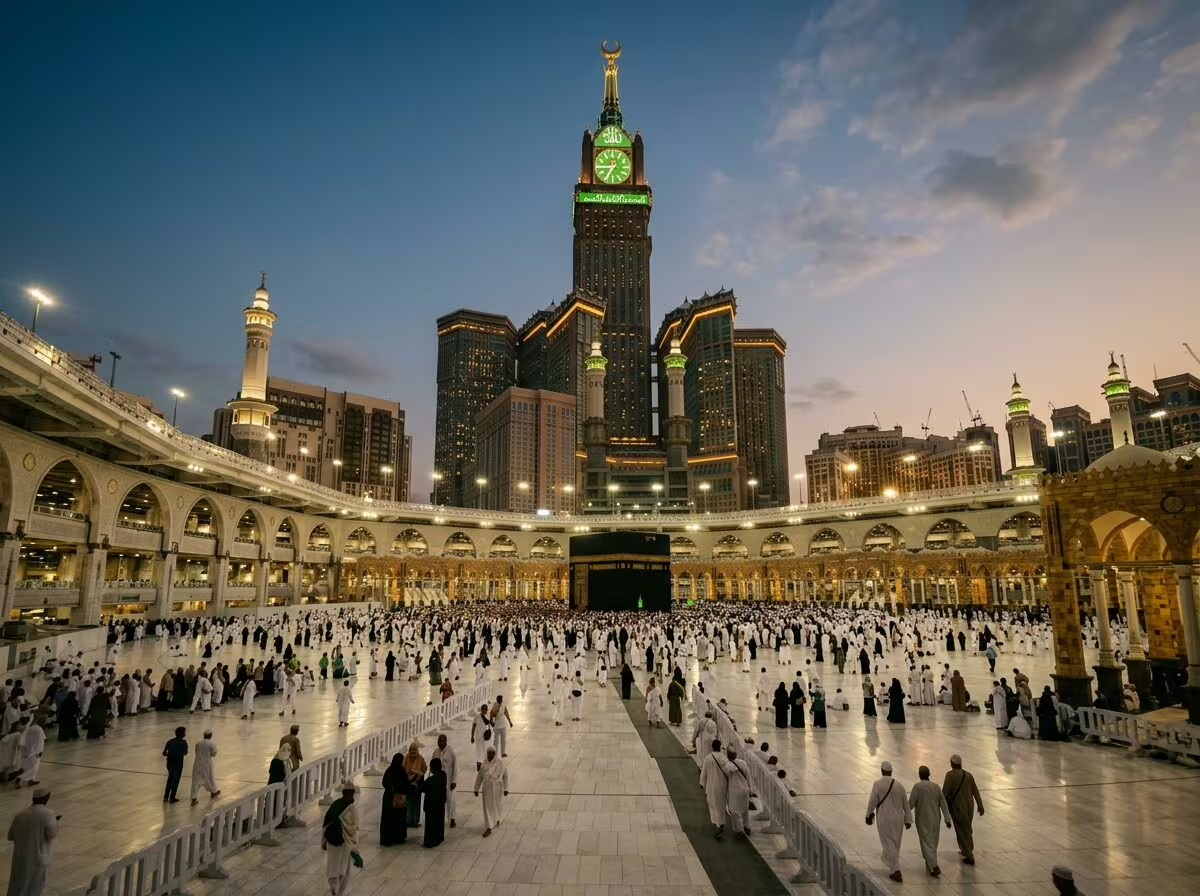
The Clock Tower complex houses some of the best-known addresses at the Haram, including the Fairmont Makkah Clock Royal Tower and Swissôtel Al Maqam.
What proximity buys. Several towers connect down into the Abraj Al-Bait mall levels, and from those levels you can reach the King Abdulaziz Gate courtyards without stepping onto a road. In summer heat that indoor transition is worth real money: you arrive at the plaza dry rather than exhausted.
Where it slows down. These are among the tallest hotel towers in the city, and everyone in them leaves at roughly the same minute. Before and after a congregational prayer, the lift bank — not the walk — sets your arrival time. For a guest on an upper floor this means leaving the room earlier than the corridor length suggests, and coming back is often the slower direction. Guests using wheelchairs or with elderly parents should ask specifically whether the property runs a dedicated pilgrim lift bank or a staffed service lift, because the ordinary guest lifts are where the crush happens.
Who it suits. Short, intense trips where every minute inside the Haram counts, and travellers who value being able to return to the room between prayers without a bus.
What to ask before booking: which tower, which floor, how many lifts serve that tower, and whether the route to the Haram stays indoors the whole way.
Jabal Omar: podium access and wider plazas
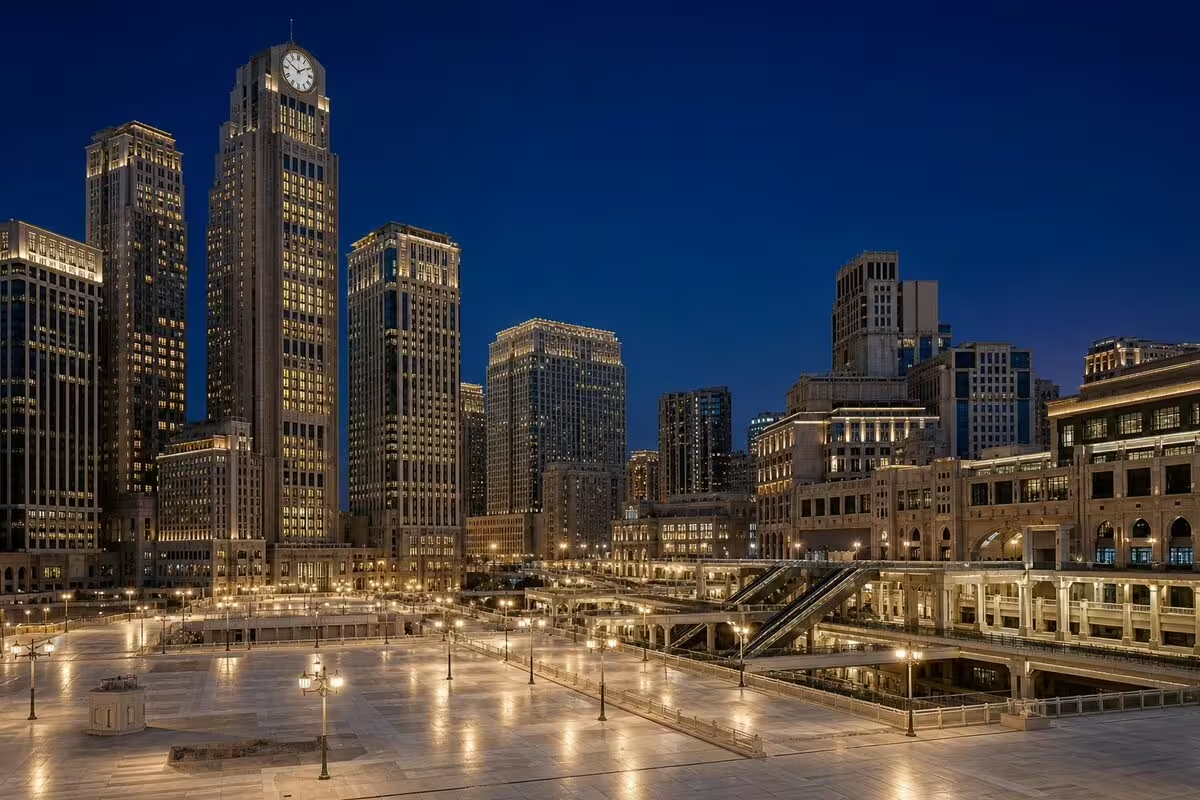
Jabal Omar runs along the western and north-western perimeter and includes properties under flags such as Conrad, Hyatt Regency, Hilton and Marriott. The development was built around pedestrian movement rather than around a single tall tower, and it shows.
What proximity buys. Instead of one crowded lift core, the blocks use wide escalators, connecting bridges and open-air walkways up to the King Fahad Gate sector. The flow spreads out, so a family with a pushchair or an elderly parent is not funnelled into a single bottleneck.
Where it slows down. The horizontal walk is longer than the Clock Tower's best-case route, and in the busiest hours the plazas fill anyway. Some blocks sit higher up the slope, so the final approach includes a gentle climb or an extra escalator run.
Who it suits. Multi-generational families, guests with mobility aids, and anyone who would rather walk fifteen steady minutes than wait fifteen unpredictable ones for a lift.
What to ask before booking: how far the block is from the King Fahad Gate approach, whether the bridge route is open at prayer time, and whether the hotel has step-free access from lobby to plaza.
Aziziyah, Al Maabda and Kudai: the shuttle calculation
Peripheral sectors are where the space is. Rooms are larger, prices are lower, and a long stay becomes affordable — at the cost of depending on a bus.
How the shuttle actually works. Reputable hotels run their own fleets to designated transit points such as the Kudai or Ajyad terminals, and from there you continue on foot. The bus is quick outside peak windows and unreliable inside them.
The peak-hour problem. During the last ten nights of Ramadan, on Fridays around Jummah, and through the Hajj season, traffic management around the central ring restricts vehicle access. Shuttles can be stopped short of their usual drop-off, or suspended shortly before congregational prayer, and they resume late afterwards. Plan the trip around the bus, not the bus around the trip.
Who it suits. Long-stay pilgrims, large family groups paying for several rooms, and travellers who pray in the hotel or at a neighbourhood mosque during the day and come to the Haram for the main obligations.
What to ask before booking: the exact terminal the shuttle serves, the first and last departure, what happens to the service during Ramadan's final ten nights, and whether a return trip is guaranteed after Isha.
Which sector fits which pilgrim
- Two nights, one Umrah, maximum time inside the Haram: Abraj Al-Bait, and accept the lift queue. - Parents or a wheelchair in the group: Jabal Omar's podium blocks first, an Abraj Al-Bait tower with a staffed service lift second. - Ten nights or more, three or four rooms: a shuttle zone, with a written shuttle timetable and a buffer before every prayer. - A group that prays mostly in the hotel: the shuttle zone's disadvantages shrink, and the saving is real.
Four questions to ask before you confirm a booking
1. Which gate does your usual route reach, by number? Get it in writing in the chat thread, not from the listing's "500 m from Haram" line. 2. How does the property handle the ten minutes after a congregational prayer? A hotel that has an answer has thought about it; a hotel that says "there are lifts" has not. 3. Is the access step-free from the room to the plaza? If anyone in the group uses a wheelchair, ask for the route, not the ramp's existence. 4. What is the cancellation position if the sector turns out wrong? A free-cancellation window is the cheapest insurance in this decision.
Once the sector is settled, the paperwork decides whether the gate opens: the hotel's Booking Reference Number has to be tied to your visa before Nusuk will issue anything, which is covered in our guide to [Nusuk hotel BRN and Rawdah permits](/blog/nusuk-hotel-brn-rawdah-gate-guide).
8. Frequently Asked Questions
Which Makkah sector gives the fastest access to the Haram courtyard?
Jabal Omar's lower podium blocks and the towers that open straight into the King Fahad Gate or King Abdulaziz Gate approaches usually produce the fastest room-to-plaza time, because you avoid both a street crossing and the single crowded lift core of an ultra-tall tower.
Do Abraj Al-Bait hotels really have lift delays around prayer?
Yes, and the delay is structural rather than incidental: thousands of guests in the same tower leave and return within the same short window. Ask the property how many lifts serve your tower and whether there is a separate pilgrim or service lift, then leave the room earlier than the corridor length suggests.
Is a shuttle hotel in Aziziyah workable for a five-night Umrah?
Yes, if you accept that the bus sets your timetable. Confirm the terminal, the first and last departure, and what the hotel does during Ramadan's last ten nights, when traffic management can shorten or suspend the route.
Should elderly parents avoid the Clock Tower hotels altogether?
Not necessarily. The indoor walk is genuinely easier than a street crossing, so the question is the lift: if the property can show a staffed service lift and a low floor, the tower works well; if not, a podium block in Jabal Omar is the safer choice.
Does the sector change what I pay for the hotel?
It changes it more than the star rating does. The same room standard can differ sharply between the perimeter and the shuttle zones, which is why comparing two properties per tier before booking is more useful than comparing dozens across the whole city.
Which sector is quietest at night?
The peripheral blocks, by a distance. If sleep between Fajr and breakfast matters to you, that is a real argument for a shuttle zone, provided the return trip after Isha is confirmed.
Sources for this guide
The list includes government, airline, news and booking sources; not every link supports every claim. Confirm live details with the relevant authority or carrier before travel or booking.
- [1] Saudi Ministry of Hajj and Umrah — official portal for Umrah services and pilgrim guidance
- [2] Nusuk — official pilgrim platform, including accommodation and permit services
- [3] Saudi Ministry of Hajj and Umrah — Umrah permit application service
- [4] Visit Saudi — current visa regulations and eligibility
Compare the towers, the podium blocks and the shuttle zones side by side
Sector decides your prayer routine more than star rating does. Shortlist two properties per tier, then check live availability for your dates so the price difference is the only variable left.
Compare Hotel Rates & Availability
Affiliate link: URAL may earn a commission if you book through this link. You pay the partner's price, not a marked-up one.
Plan your trip
- Nusuk hotel BRN and Rawdah permits: what actually opens the gate
- DIY Umrah visa routes and the budget checks that go with them
- Choose a Makkah or Madinah hotel whose entrance fits your gate
- Travelling with elderly parents: assistance, mobility and medical checks
- Search live hotel rates for Makkah and Madinah stays
- The DIY Umrah planning hub and budget calculator
More Travel Guides for Bangladeshi Flyers
View all guides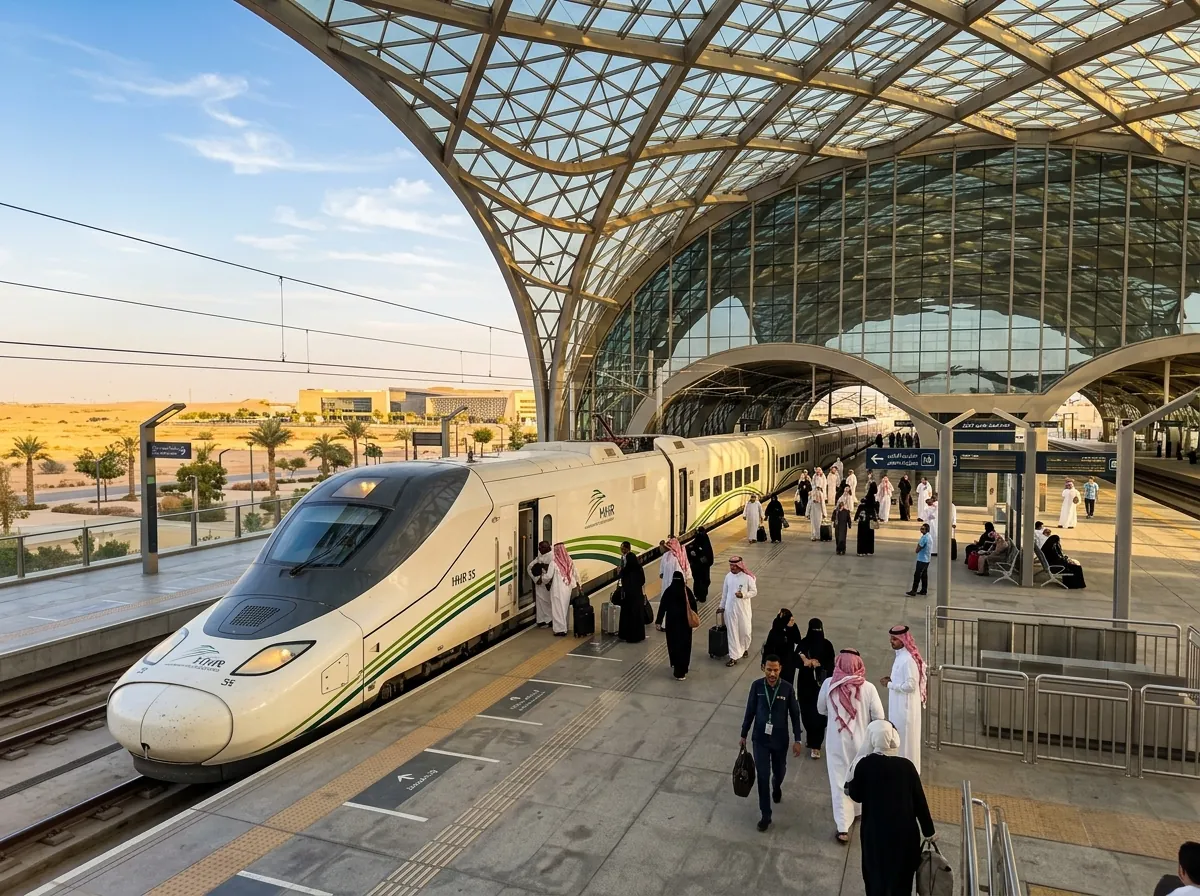
Hajj & Umrah · 10 min read
Makkah & Madinah Hotels: Access Checks and Haramain Train Guide (2026)
Choose the exact Makkah or Madinah hotel room and route, not an area-wide accessibility promise. HHR allows one large bag up to 25 kg and 65 x 55 x 35 cm plus one hand item. Its published basic fares are not checkout totals; confirm transfers and ticket conditions before payment.
Read the full guide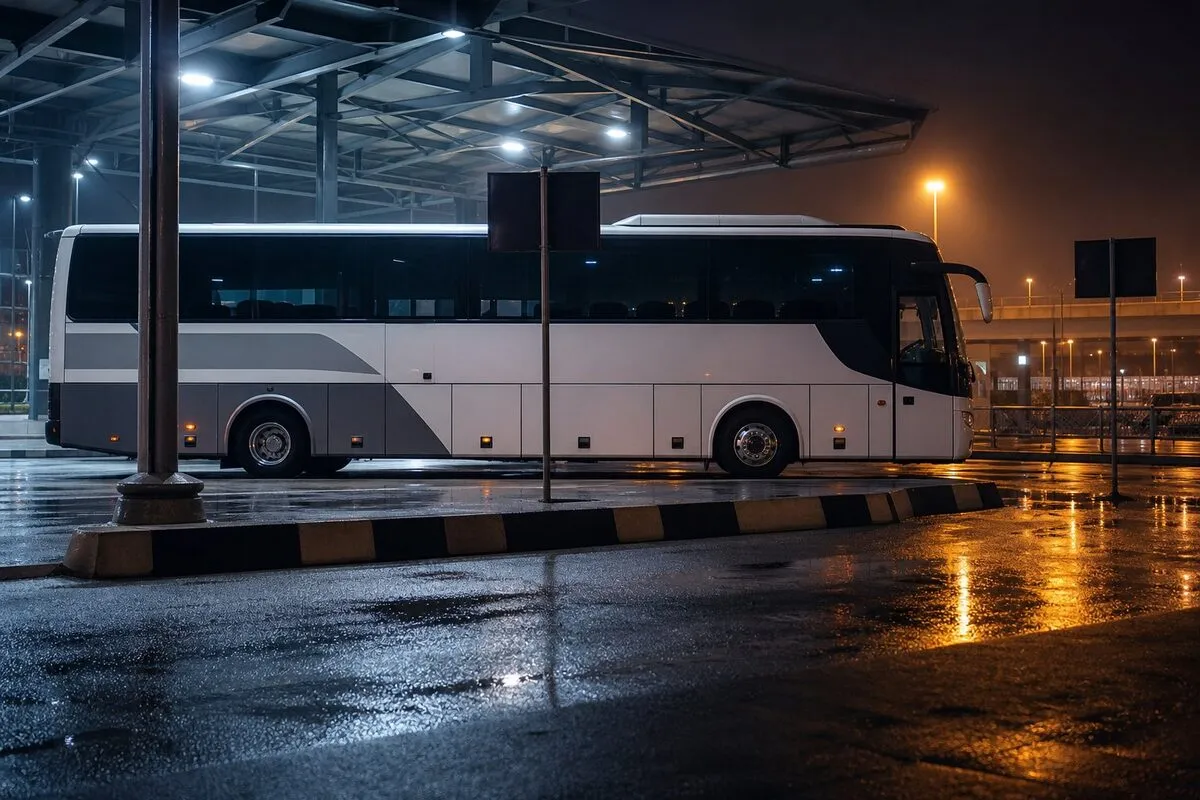
Hajj & Umrah · 11 min read
Budget Hotels in Makkah: Making a Shuttle Work at Prayer Time
A shuttle hotel is not a cheaper version of a Haram hotel; it is a different timetable. Traffic management closes the roads around Masjid al-Haram before each congregational prayer, so the bus you rely on has to be boarded well ahead of the adhan, and it will drop you at a municipal terminal such as Kudai or Jarwal rather than at a gate. Budget the 7 to 12 minute walk from the terminal, and check the bed configuration before you compare prices.
Read the full guide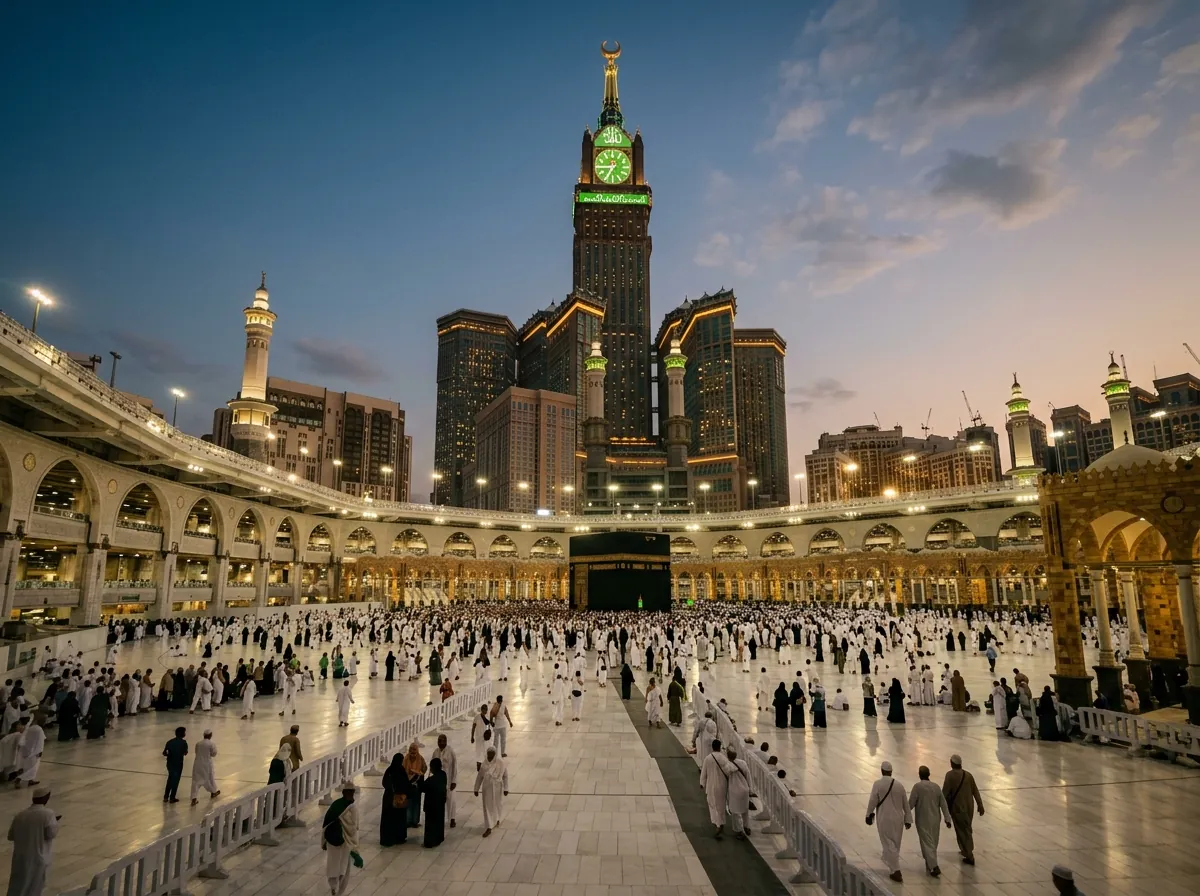
Hajj & Umrah · 12 min read
DIY Umrah from Bangladesh: Visa Routes, Nusuk Steps & Budget Checks
Check your eligible Umrah visa route and season before paying. Complete biometrics when the application requests them, then check the issued visa before Nusuk visitor registration and separate permits. Package conditions vary. The ten-day/four-sharing BDT reference is historical, not a current quote or evidence of agency savings.
Read the full guide