Makkah Walking Times: What Map Distance Does Not Tell You
Quick Answer & Key Takeaway
Checked 8 November 2026: the four stages that make up room-to-carpet time in Makkah, how the Clock Tower towers and Jabal Omar blocks differ in practice, and when paying for ground access is worth it.
The short answer
A booking map measures one line: from the building to the mosque boundary. Your journey has four stages, and the first one is invisible on that line.
Room-to-carpet time = lift wait + internal corridor + plaza walk + gate clearance.
In Makkah's tallest towers the lift wait can be the largest number in that sum, especially in the half hour around a congregational prayer. In Jabal Omar and along the western plaza, the same sum is dominated by a short, flat walk. The distance claim on the listing is the one number that tells you least. One large booking platform currently lists the Clock Royal Tower at about 900 feet from Masjid Al Haram and Swissotel Al Maqam at about 700 feet, and both figures are a straight map line to the mosque boundary — not the corridor, the lift queue and the gate you will actually cross [5].
Stage one: the lift
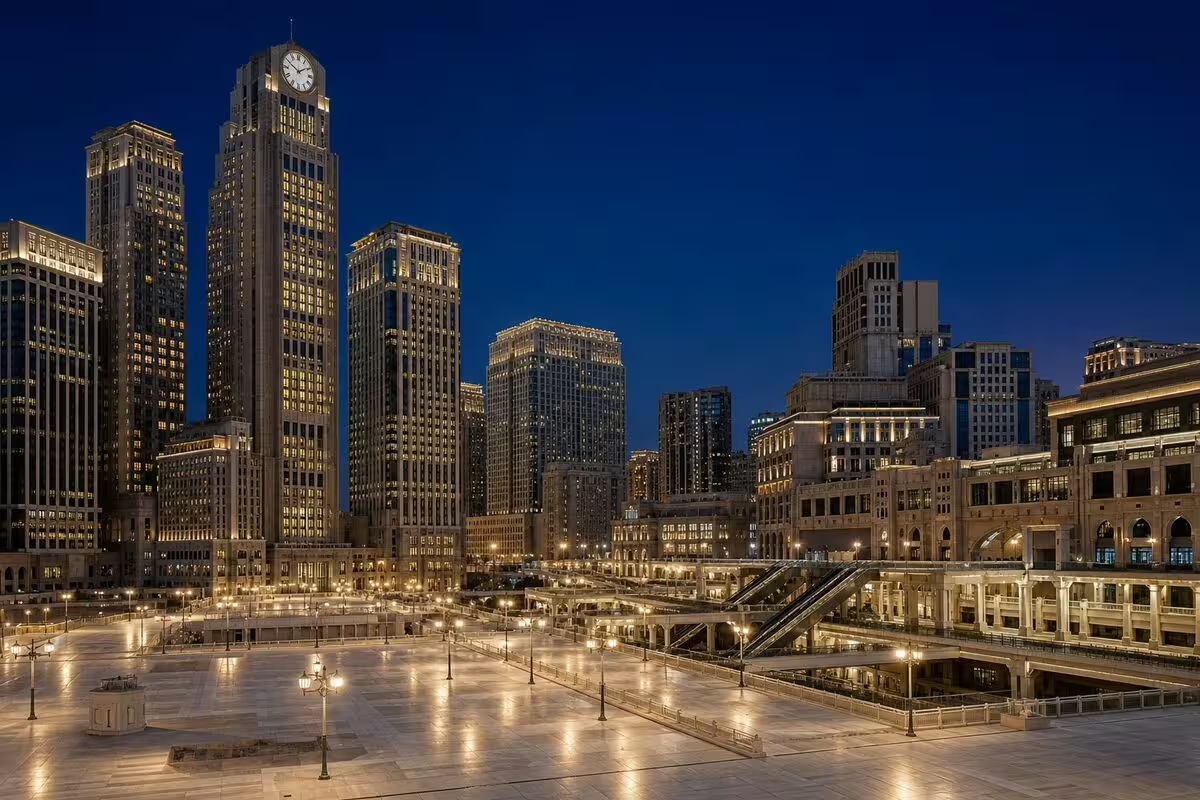
Vertical density is what separates the Clock Tower complex from everywhere else. Abraj Al-Bait houses some of the best-known hotels in the city inside a handful of towers, and every guest in a tower tends to leave at the same minute. On upper floors, the wait for a lift in the peak Fajr and Isha windows can run into double-digit minutes, and it is not a queue you can walk around.
What that means practically:
- Floor matters as much as tower. A low floor in a tall tower can beat a high floor in a shorter one, because the lift stops fewer times on the way. - Ask about lift banks, not lifts. A tower with a dedicated pilgrim or service bank, or a separate bank for the upper section, moves people very differently from one that funnels everyone through a single lobby. - The return trip is the slow direction. Everyone arrives back in the same ten minutes after prayer. If a hotel's exit is fine but its entrance is a single lift core, plan for the entrance.
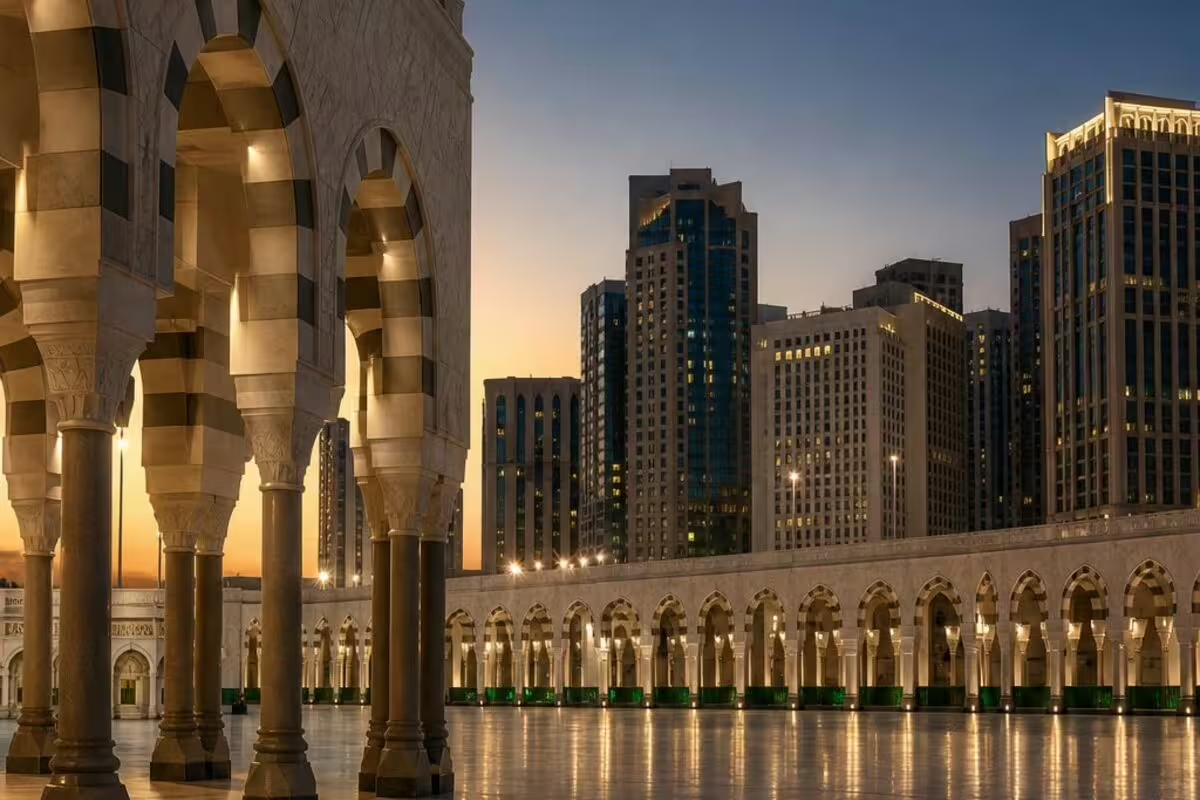
Jabal Omar changes the sum because the buildings are lower and the exits are at plaza level. A few minutes of lift, a few minutes across a covered arcade, and you are at the western courtyard — the profile most guests describe as the calmest in the city.
Stage two and three: corridor and plaza
Inside the Clock Tower complex, the walk to the courtyard often passes through mall levels. That is a genuine benefit in summer: you stay in air conditioning instead of crossing hot marble. It also adds minutes, and on busy days it adds people. The Swissôtel properties, for instance, connect into the complex and offer covered access, which is why they are popular with families in July and August.
On the western side the walking is outdoors but flat and wide. The trade is heat for distance: less air conditioning, more open plaza.
Neither is better in the abstract. With toddlers and grandparents in August, covered access wins. In December, an open plaza is fine.
Stage four: the gate
The gate is where a good booking becomes a bad one. A hotel can be a hundred metres from the mosque boundary and still be fifteen minutes from the entrance your group is allowed to use, because gate assignments channel people around the building rather than straight at it.
The gate corridors that carry most of the traffic:
- King Fahad Gate (the 79 side) — the western approach, wide and step-free, and the one that wheelchair users are usually directed to. - The Ajyad gates (the 84–90 range) — the southern approach under the Clock Tower, close to Abraj Al-Bait, and the busiest before Fajr and Maghrib. - King Abdulaziz Gate (the 1 side) — the southern plaza entrance, convenient for the Ajyad side and for arrivals from the Kudai direction.
Two rules follow. First, find out which gate the hotel's normal route reaches. Second, check whether that is the gate for your group's prayer area, because a correct hotel routed to the wrong gate is a longer walk than a further hotel routed to the right one.
The ground-access benchmark
For elderly parents, wheelchairs and anyone with limited stamina, one property profile stands apart: a standalone building with a lobby at plaza level and no mall between you and the marble. Dar Al Tawhid InterContinental on the western plaza is the standard example — step out of the lobby, cross flat ground, and you are at the King Fahad Gate side, with none of the lift and corridor stages that dominate a tower.
That is what a premium buys in Makkah: not the room, but the removal of two stages from the sum. If you are travelling with someone who cannot manage a fifteen-minute indoor detour twice a day, it is the most rational money in the trip.
Further west, Conrad Makkah and Jumeirah Jabal Omar give a similar profile from a taller building: paved exits, arcades and escalators rather than a single lift funnel, with a longer flat walk to compensate. Address Jabal Omar adds a skybridge prayer hall for guests who want to pray above the plaza; DoubleTree further up the incline runs a shuttle for those who do not want the downhill walk.
Is proximity worth the premium?
Run the question on the hours, not on sentiment:
- Choose ground access when someone in the group has mobility limits, is pregnant, or is very young, and when you intend to attend most prayers in the Haram. Removing two stages from the sum, four or five times a day, is the difference between a pilgrimage and an endurance test. - Choose the shuttle zones when the group is fit, the stay is long, and the saving is being spent on something that matters more — more nights, a better room, or the flights themselves. A week's difference between the plaza ring and the periphery is often an entire extra week of stay. - Choose the middle when you want the walk without the tower: a Jabal Omar mid-range block, a low floor, and a written note of which gate the route reaches.
Whatever you choose, the permits still decide the gate: the booking has to produce a Booking Reference Number and the permits have to be issued in Nusuk. Our [Nusuk hotel BRN and Rawdah permit guide](/blog/nusuk-hotel-brn-rawdah-gate-guide) covers that chain.
7. Frequently Asked Questions
Why do Clock Tower hotels take so long when they are only a hundred metres away?
Because the hundred metres is horizontal only. The lift wait in a very tall tower at peak prayer time, plus the walk through the complex's internal levels, plus the gate queue, can add up to well over a quarter of an hour even though the building sits beside the courtyard.
Which Makkah hotels give the shortest room-to-courtyard time?
The ground-access profile wins: a standalone building with a plaza-level lobby, such as Dar Al Tawhid on the western side, where you step out onto flat marble near the King Fahad Gate. Lower-rise blocks in Jabal Omar come close, with a slightly longer flat walk.
Does a lower floor really make a difference in a tall tower?
Yes, and often more than changing towers. Fewer intermediate stops means a faster lift cycle, so a low floor in a tall tower can beat a high floor in a shorter building at peak times.
What is the advantage of Jabal Omar over the Clock Tower complex?
Lower buildings, exits at plaza level, escalators and covered arcades instead of a single lift funnel, and a direct approach to the western courtyard and the King Fahad Gate side. The walk is longer in metres and far more predictable in minutes.
Are there covered routes to the Haram in Makkah?
Yes. The Clock Tower complex connects internally, and the Jabal Omar arcades are covered and air-conditioned for much of the route. That matters most in the summer months, when the outdoor plaza is genuinely punishing at midday.
Is paying more for a closer hotel worth it for a family?
It is worth it when someone in the group cannot manage a long indoor detour or a lift queue several times a day. If everyone is mobile and the trip is long, the same money usually buys more value as extra nights or a bigger room in a walkable outer sector.
Sources for this guide
The list includes government, airline, news and booking sources; not every link supports every claim. Confirm live details with the relevant authority or carrier before travel or booking.
- [1] Presidency of Religious Affairs of the Grand Mosque and the Prophet's Mosque — official authority for the Two Holy Mosques (Arabic)
- [2] Saudi Ministry of Hajj and Umrah — official pilgrim portal
- [3] Nusuk — official pilgrim platform, permits and services
- [4] Visit Saudi — current visa regulations and eligibility
- [5] Booking.com — hotels near Masjid Al Haram with platform-measured map distances (used only as an example of how listing distances are measured, not as a walking-time source)
Compare the four stages, then the price
Two hotels at the same distance can differ by fifteen minutes at Fajr. Shortlist by lift arrangement and gate alignment first, then look at what each one costs for your dates.
Compare Hotel Rates & Availability
Affiliate link: URAL may earn a commission if you book through this link. You pay the partner's price, not a marked-up one.
Plan your trip
- Makkah hotel sectors compared: towers, podium blocks and shuttle zones
- Family and elderly hotels: ground access and real quad rooms
- Budget hotels in Makkah: making a shuttle work at prayer time
- Nusuk hotel BRN and Rawdah permits: what actually opens the gate
- Search live hotel rates for Makkah and Madinah stays
- The DIY Umrah planning hub and budget calculator
More Travel Guides for Bangladeshi Flyers
View all guides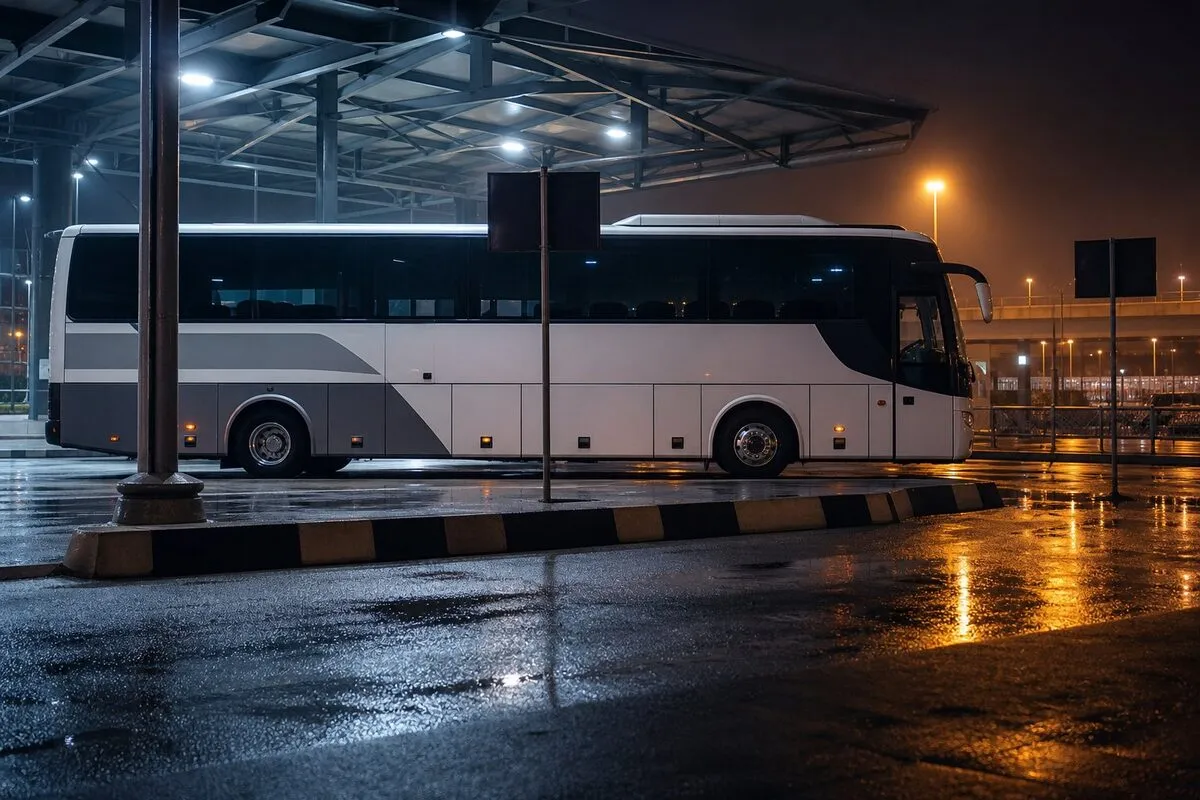
Hajj & Umrah · 11 min read
Budget Hotels in Makkah: Making a Shuttle Work at Prayer Time
A shuttle hotel is not a cheaper version of a Haram hotel; it is a different timetable. Traffic management closes the roads around Masjid al-Haram before each congregational prayer, so the bus you rely on has to be boarded well ahead of the adhan, and it will drop you at a municipal terminal such as Kudai or Jarwal rather than at a gate. Budget the 7 to 12 minute walk from the terminal, and check the bed configuration before you compare prices.
Read the full guide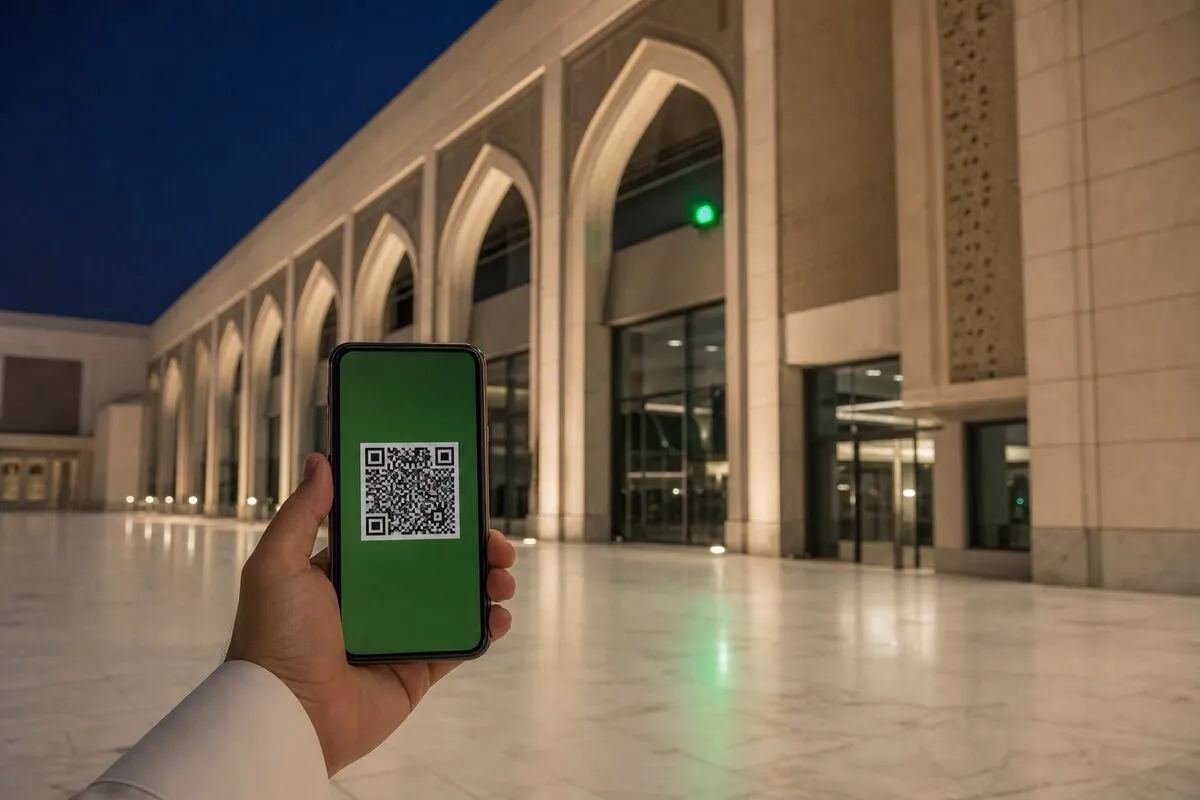
Hajj & Umrah · 11 min read
Nusuk Hotel BRN and Rawdah Permits: What Actually Opens the Gate
In 2026 a Saudi visa lets you enter the country, not the mosque. Security at Masjid al-Haram and Masjid an-Nabawi scans a QR permit issued in the Nusuk app, and that permit only exists for a profile whose visa is anchored to a licensed booking with a Booking Reference Number (BRN). Keep the hotel BRN, the transport BRN, and a screenshot of every permit on the same phone.
Read the full guide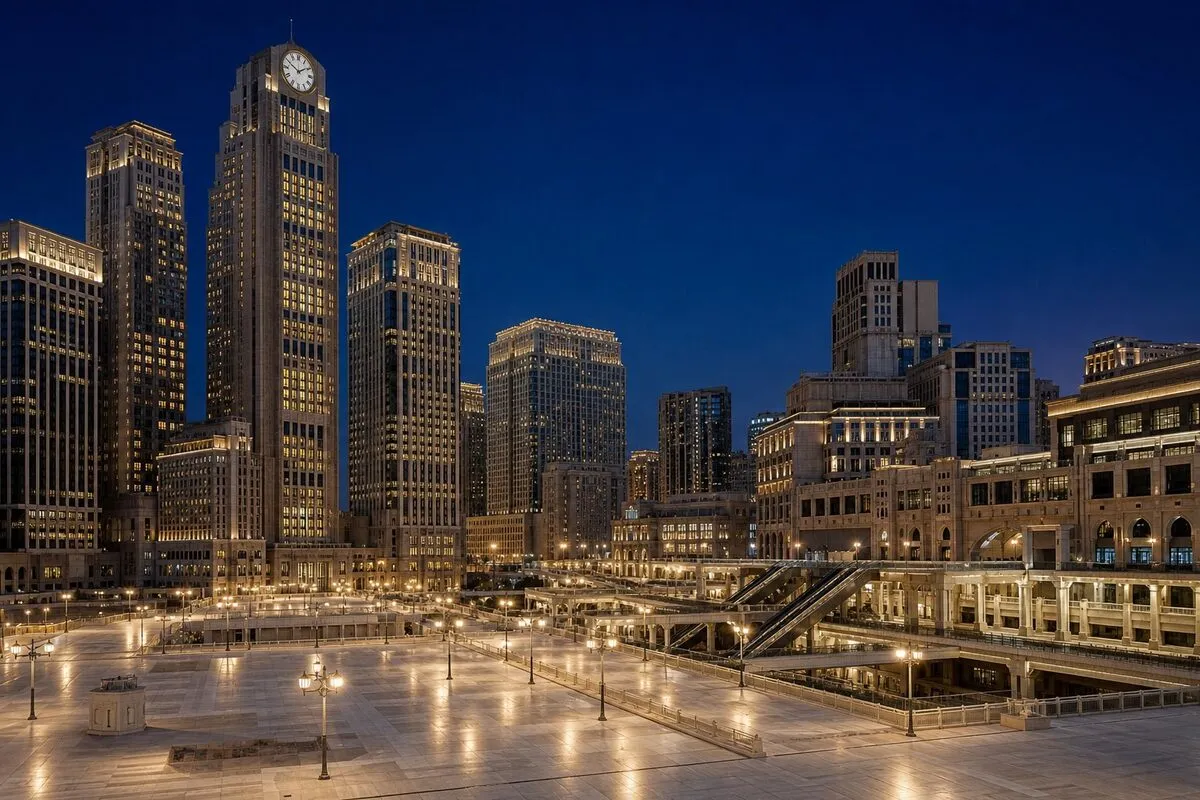
Hajj & Umrah · 10 min read
Makkah Hotel Sectors: Abraj Al-Bait, Jabal Omar or a Shuttle Zone
Makkah hotels sit in three practical tiers: the Abraj Al-Bait towers on the southern perimeter, the lower podium blocks of Jabal Omar on the western side, and the shuttle zones such as Aziziyah and Kudai. Distance on a booking map rarely predicts the real trip from your room to the prayer carpet, so compare the lift bank, the gate you will use and the shuttle's behaviour at prayer time instead.
Read the full guide