Your Travel Stories Can Take Other People Around the World — And They Can Earn Too
By Farhan Momen (Founder & Travel Editor) · Published October 25, 2026 · Updated 2026-10-26 · 16 min read
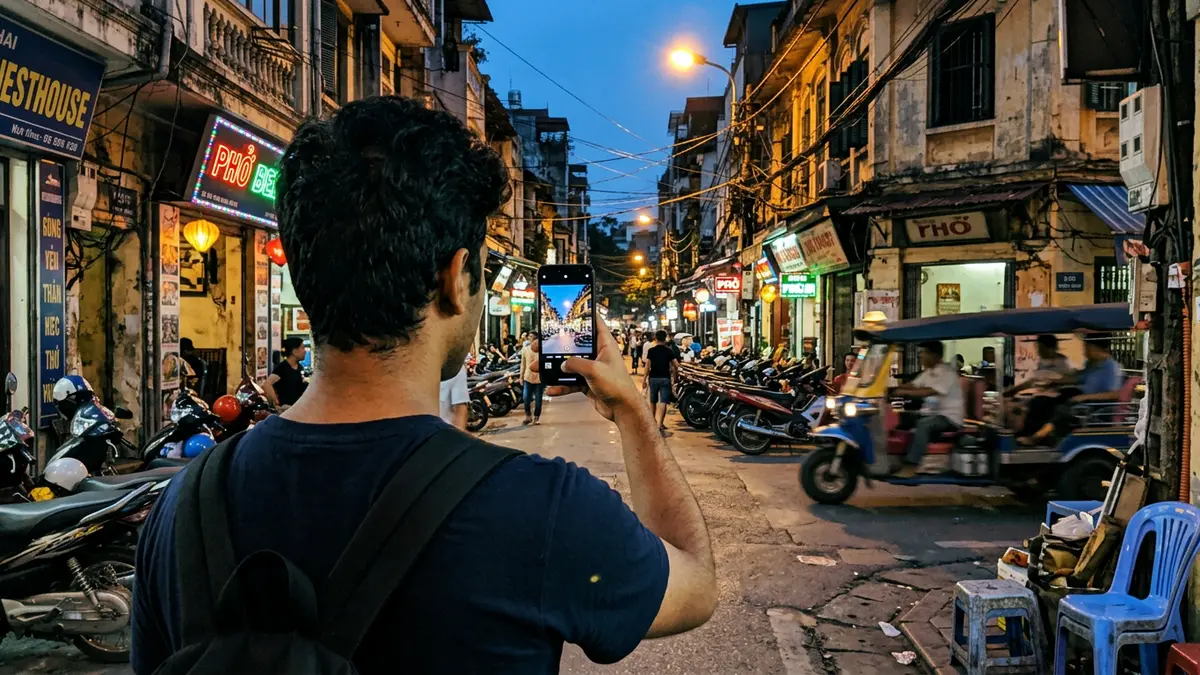
You already travel, take photos, film short clips, tell stories and recommend places to friends. This is how that ordinary habit becomes something genuinely useful to another traveller — and, where it fits, a small travel income through a booking platform such as Travelpayouts. No website required, no earnings promised.
You already travel.
You already take photographs, film short clips on your phone, tell people about the place you just came back from, and argue about which hotel was actually worth the money. You already recommend things — to friends, in a group chat, in the comments of somebody else's post — and you already warn people about the mistakes you made, usually for free.
That is the whole starting point of this article. Not a business plan, not a niche, not a course. Just the fact that you have been places, and that what you noticed there is useful to somebody who has not been yet.
Somewhere along the way the internet turned this into a different sentence: become an affiliate marketer, build a funnel, earn passive income. That framing is why most people never start. It asks you to become a marketing person first and a traveller second, and almost nobody actually wants that job.
This is about the other route. You keep travelling, keep taking the photographs, keep telling the story — and at some point a reader decides to book a hotel, a flight, a ticket or an airport transfer that you recommended. If a booking platform such as Travelpayouts sits behind that recommendation, a commission may follow. That is the whole mechanism. It is quieter than the marketing version, and it only works when the recommendation was worth making in the first place.
What you already have, without calling it content
Think about what came home with you from the last trip.
Not the photographs. The other things. Which queue at the airport was slow. What the room actually looked like when you opened the door. Whether the walk to the beach was fifteen minutes or forty-five. How much the taxi cost at two in the morning. The day the museum was closed, which no website mentioned.
That is decision material. Somebody planning the same trip this month needs exactly that, and no travel agency in the world will give them the honest version.
None of it requires a website, a logo or a content calendar. It requires a phone, a memory, and the willingness to write it down in the same language you would use with a friend.
What turns a photograph into something useful
A photograph proves you were there. It does not, by itself, help anyone decide.
The gap between "beautiful" and "useful" is context. What it cost. What time of day it was. Who the place suits and who it does not. Whether the view was from the room you paid for or from the corridor. Anyone scrolling can see that a beach exists; only you can tell them that the sea is a two-minute walk from the guesthouse gate but the road in front has no lighting after nine.
Useful also means specific. "Great hotel, lovely staff" is noise. "Fourth floor, road side, ask for the back building if you sleep early" is a sentence somebody will screenshot.
This is why follower counts matter far less than most people assume. The reach of a post decides how many people see it. The specificity of a post decides whether the ones who saw it do anything. A small account with a genuinely useful post about one neighbourhood can be worth more to a traveller than a large account posting sunsets.
Five things you can publish this week
A post that answers one question completely. Not ten questions badly — one question properly, with the detail only a person who has been there can give.
A carousel of a checklist, made from screenshots of your own notes. Six frames are enough: what to book, what to prepare, what to expect on arrival, what surprised you, what you would do differently, and what it cost.
A short vertical video. Thirty to sixty seconds on one thing: the walk from the station, the queue at immigration, the room you paid for.
An answer inside a group or thread where the question is already being asked. Not a post. A reply, written to help, with no link at all.
A pinned post or highlight that collects your best answers in one place, so a new reader can see that you are a person who knows something rather than a person who is selling something.
None of these requires a website. All of them require a real trip behind them.
From "I went there" to "here is how you can go"
The chain is short, and almost every guide skips straight to the end of it.
You go somewhere. You come back with photographs, a few clips, an opinion and a handful of costs. You turn that into a story that answers a question. Somebody reads it while they are planning the same trip. They follow one of the recommendations. They book, or they do not.
That last step — the booking — is the only place where money exists. Everything before it is the part you control, and it is also the part that decides whether the last step ever happens.
Which means the order matters: useful first, link second. A traveller who writes a genuinely helpful answer and never earns a taka has still made something worth keeping. A traveller who chases the link and skips the answer has made an advertisement nobody reads.
Where the earning sits — and why it is not the point
You do not need to own a hotel, sell airline tickets, or become a travel agent. You need a reader who has decided to book something, and a way for that decision to be tracked back to the recommendation that caused it.
That is what an affiliate platform does. Travelpayouts is the one this site uses: it gathers flight, hotel, transfer, activity, e-sim and insurance programmes into a single dashboard, so one creator can recommend across a whole trip instead of signing six separate agreements. When a reader books through a link you were given, the brand can pay a commission if the booking confirms and the programme's conditions are met.
Two details are worth knowing before you imagine anything.
First, no website is required. Travelpayouts documents a separate on-ramp for social creators and says plainly that a website is not necessary: you register a project for your channel — Instagram, TikTok, YouTube, a Facebook page — and the brands that accept social traffic appear in your dashboard. Some brands exclude social traffic, and those simply will not be offered to that project. The platform also does not promise that every brand will accept you.
Second, earnings are not guaranteed, and for most people they are small or zero for a long time. A commission exists only when a specific person books a specific product, the booking confirms, and the programme counts it. Your post can be excellent and still produce nothing, because it was read by people who were not ready to book. That is normal, and it is why the next section matters more than this one.
How the partners fit together into one journey
Here is the part almost nobody explains. A traveller does not make one decision; they make a dozen, in order, over weeks. Before your post can earn anything, those decisions must be served by companies that each own one stage of the trip.
Seen from the traveller's side, the journey looks like this.
Deciding when to go. Flight prices move by date and weekday. This is where fare comparison tools do their work, and where a creator's honest note about a cheaper day is worth more than any advertisement.
Getting there. The airline, the route and the baggage allowance. A reader booking an open-jaw ticket into Jeddah and out of Madinah is making a more sophisticated decision than a search box can hold, which is exactly why the explanation matters.
Somewhere to sleep. Hotels are judged on location first and price second. This is the most requested stage in every group I have read, and the one where an honest description of a room beats a stock photograph.
From the airport to the bed. Transfers are small money and large anxiety. A pre-booked car is sold here, not in the flight search.
What to do while you are there. Tickets, passes and timed entries. The smallest individual purchases and the highest-frequency ones, which is why activity platforms exist at all.
Staying reachable. Data on arrival. An e-sim bought before departure removes an entire category of first-hour stress and is one of the few travel products a creator can recommend with almost no downside.
If something goes wrong. Insurance, and when a flight is delayed or a bag disappears, compensation. The least glamorous stage, and the one nobody researches until they need it.
Paying for it from Bangladesh. This stage is invisible to travellers from most countries and unavoidable for ours. Cards, endorsement, foreign-currency limits, and how a booking can fail for a reason that has nothing to do with travel.
Coming home. What you may bring back, and how much of it is duty-free. The last stage of the trip and the first thing people ask about on the return flight.
That is the ecosystem. Every stage has a partner type attached to it, and no single company owns the whole journey. Which is why a creator with one good post about one stage can still earn inside a system they do not control — and why nobody should expect a single link to cover a holiday.
Where that ecosystem is still incomplete
This is the part I would rather write honestly than conveniently.
The ecosystem above is built for international travel. Whole stages of it are missing or thin elsewhere.
Domestic travel in Bangladesh is the clearest gap. Railway and coach booking are not part of the partner network in the way flights and hotels are, which means a genuinely popular trip — Dhaka to Cox's Bazar, for instance — can be written about in detail and still produce almost no trackable commercial path.
Food is a stage with no booking layer. A reader will follow a restaurant recommendation and there is nothing to attribute, which is fine editorially and useless commercially.
Visa application services sit outside the network almost entirely. A reader may need an agent or a document service, and the honest answer is often "do it yourself at the official portal", which is good advice and earns nothing.
Accessible and elder travel is underserved on every platform. Assistance, wheelchairs, medical clearance and the practical route to a gate are all real needs, and almost nothing in the partner ecosystem is designed to serve them.
Group and family planning is fragmented. A family of six booking four rooms, a transfer and five tickets is worth a great deal to a partner and is badly served by search boxes built for one person.
So no, the ecosystem is not complete, and anyone claiming it is has probably not tried to book a train from Dhaka.
Disclosure is not paperwork
If a link can pay you, the reader is entitled to know that before they click it.
This is not a legal technicality buried in a footer. It is a line, near the link, in plain language: this is an affiliate link, I may earn a commission, it does not change your price. Platform rules and most national advertising regulators expect that to be clear and close to the thing it describes, not hidden in a profile biography or a privacy page.
It also protects you. A creator who says "this link pays me" keeps the reader's trust when the recommendation is good. A creator who hides it loses everything the first time somebody notices — and on a social platform, somebody always notices.
The maths that keeps you sane
A click is not a commission. Between the two sit a destination change, a comparison, an abandoned cart, a cancellation, a transaction that never confirms, and a programme condition that excludes your particular booking.
Attribution works differently from programme to programme. Some count a booking made days after the click, some count only the booking that follows immediately, and none of them count a link a platform refused to make clickable.
Two numbers explain most of the disappointment, and both are published. Most programmes on the network this site uses keep a 30-day cookie, with some running as long as 365 days, so a booking made weeks after the click can still count. Payouts settle monthly, between the 11th and the 20th, once you pass the programme's minimum threshold. Everything else — the commission rate, whether the booking confirms, whether the brand accepts social traffic at all — is set by the brand, not by you.
And nothing here is guaranteed. A good story with a poor link earns nothing; a poor story with a perfect link also earns nothing. Only the combination, repeated, produces a result — and the honest expectation for the first months of any new channel is close to zero.
What I am doing with URAL
URAL Travel exists partly as an answer to one question: can useful, carefully sourced travel content become a business rather than a hobby?
The honest status is that it has not produced meaningful affiliate income. What it has produced is a clearer understanding of the chain described above: that the story is the product, the partners are the plumbing, and the plumbing is worth nothing without trust in front of it.
If you want the long version, including the parts that did not work, it is in the experiment article linked below. I would rather publish that than a screenshot.
Start with one post, not a channel
The failure mode is almost always the same: a new account, a plan for ninety posts, and nothing published by week three.
Pick one question you can answer better than a search result. Write the answer for one platform. Publish it. Then reply to three questions in the places where your reader already is, with no link at all. When someone asks the question your post answers, that is the moment to link it, once, in the reply.
Then record what happened. Not earnings — reach. How many people saw it, how many replied, how many asked a second question. If nobody asks a second question, the content is not yet useful, and no link will fix that.
Repeat that three times before you buy a domain. You may find you never need one.
If you want the toolkit
There is nothing wrong with a website. If you build one later, everything you published socially becomes material for it, and the audience you earned carries over. It is simply not the first step, and treating it as the first step is what stops most people.
What you do need is a network that already contains flights, hotels, transfers, activities, connectivity, insurance and claims, because that is the shortest path from a post to a testable link. The creator resources hub below lists what this site actually uses. The referral block at the end of this page is where Travelpayouts sits in our own setup — and the way it is described there is the way it should be described to your readers: this is how I may earn, here is what it costs you, which is nothing.
My recommendation is not to sign up for anything until you have published ten useful posts. If the answer is still "yes" after that, the platform will still be there — and you will know what you are doing with it.
The point
Your journey is the product. The platform is just plumbing.
You are not being asked to become an affiliate marketer. You are being asked to notice that the thing you already do — going somewhere, looking properly, coming back and telling people what you learned — has value to a stranger planning the same road. A website is one way to publish that. A social account is another. Neither is the reason somebody trusts your advice about a hotel room, and neither is the thing that pays you.
What pays, sometimes, is a specific person, mid-decision, finding a specific answer, and taking the next step through a link that was relevant enough to be worth clicking. Everything before that step is still yours, and it is the only part worth obsessing over.
You already did the travelling. Start by writing down one thing you know that nobody told you before you went.
Sources for this guide
The list includes government, airline, news and booking sources; not every link supports every claim. Confirm live details with the relevant authority or carrier before travel or booking.
- [1] Travelpayouts — For social media creators
- [2] Travelpayouts — For bloggers and website owners
- [3] Travelpayouts — What is Travelpayouts and how it works
- [4] Travelpayouts — Referral program
- [5] Travelpayouts — Terms of the referral program
- [6] Federal Trade Commission — Disclosures 101 for social media influencers
- [7] Google Search Central — Creating helpful, reliable, people-first content
Want to turn your travel experiences into a small travel income stream?
If you are already sharing travel photos, videos, stories or recommendations, you can judge for yourself whether Travelpayouts' affiliate tools fit what you publish. You can join Travelpayouts through my referral link here, after reading the programme terms. Remember that rewards depend on the programme and on the booking actually confirming - nothing here is guaranteed. Explore Travelpayouts.
Transparency: this is my referral link. If you join through it and later meet the programme's conditions, Travelpayouts may pay me a referral reward at no extra cost to you. It does not reduce your own earnings.
Plan your trip
- Compare live flight options from Dhaka
- Search live hotel prices for your destination
- Pre-departure essentials: eSIM, insurance and what to arrange before you fly
- Activities, tickets and attraction passes for the places you write about
- How Bangladeshi travellers pay abroad: RFCD, travel quota and dual-currency cards
- Plan the numbers first with the BDT trip budget calculator
- Planning Umrah from Bangladesh: the guide most of our readers start with
- Ask the URAL desk a question about your own plan
Related Bangladesh travel guides
- The honest experiment: can travel affiliate marketing actually earn anything?
- Travel creator resources: the tools and programmes behind this site
- Ramadan 1448 Umrah & I'tikaf Guide from Bangladesh (2027): Dates, Season Deadlines and Who Can Register
- Zamzam, Dates & Gold: What You Can Actually Bring Back to Bangladesh (2026)